
House of the Dragon has never been a page-for-page adaptation of George R.R. Martin’s Fire & Blood, but the divide between the HBO series and its source material became even more apparent in S3.
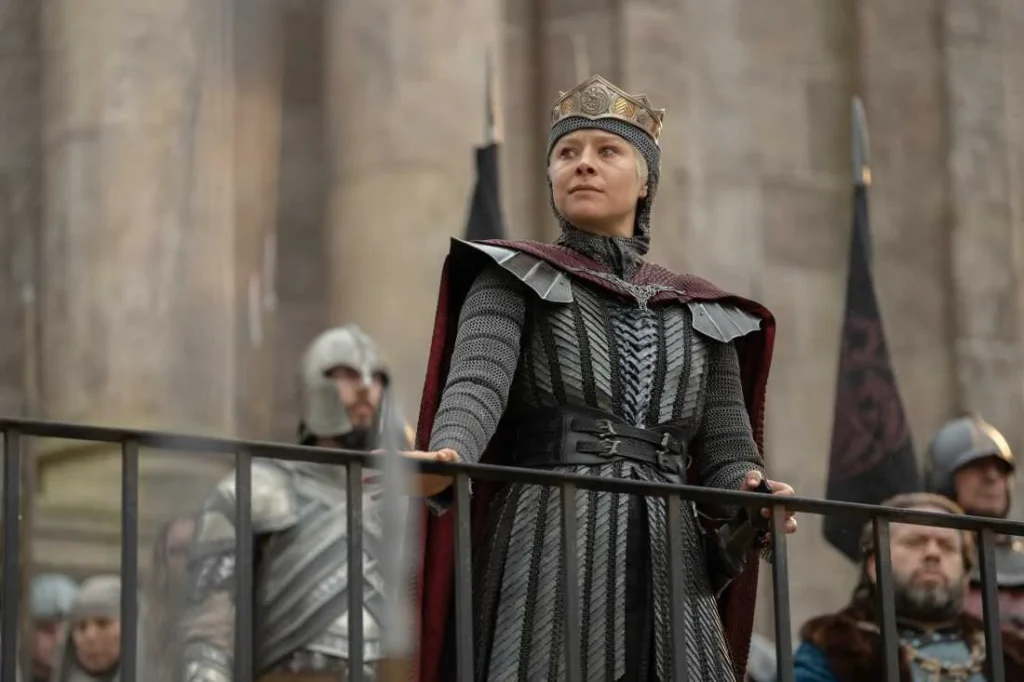
Showrunner Ryan Condal has now opened up about his approach to adapting the Targaryen Civil War, defending the increasingly substantial changes made to Martin’s story and explaining that he ultimately had to stop worrying about how every deviation would be received.
“For me, necessary changes in the translation of something from one medium to another seem less controversial. People have to understand that I have 200 pages of prose to work with to make four seasons of television.”
That philosophy is particularly noteworthy given Condal’s now-public falling out with Martin himself — and Season 3’s willingness to substantially rewrite several of the author’s characters and events.
Ryan Condal says he had to stop worrying about every change
Condal acknowledged that the prospect of changing Fire & Blood previously caused him considerably more anxiety. By the time S3 entered development, however, his approach had changed.
“Between season 2 and season 3, I just realised that I really can’t live like this anymore—just worrying about every little thing. I have to trust my instincts as somebody who’s read Fire & Blood probably more than anybody else on the planet at this point.”
Despite the deviations, Condal still considers House of the Dragon “tremendously faithful to the overall text and the broad story that it is telling,” even when individual moments differ from Martin’s version. I’m sure many fans disagree with this.
Condal has also pointed to the unusual nature of Fire & Blood itself as justification for some of the adaptation’s flexibility. Unlike a traditional novel, the book presents the Dance of the Dragons as a historical account compiled from conflicting and sometimes unreliable sources.
“We know certain things happened—big things like coronations, deaths, things like that—but the hows and the whys seem more up to interpretation. Individual moments could be up for debate. I guess I wasn’t ready for how much every little individual thing was going to be scrutinised. It’s just our interpretation of it.”
George R.R. Martin has a very different perspective
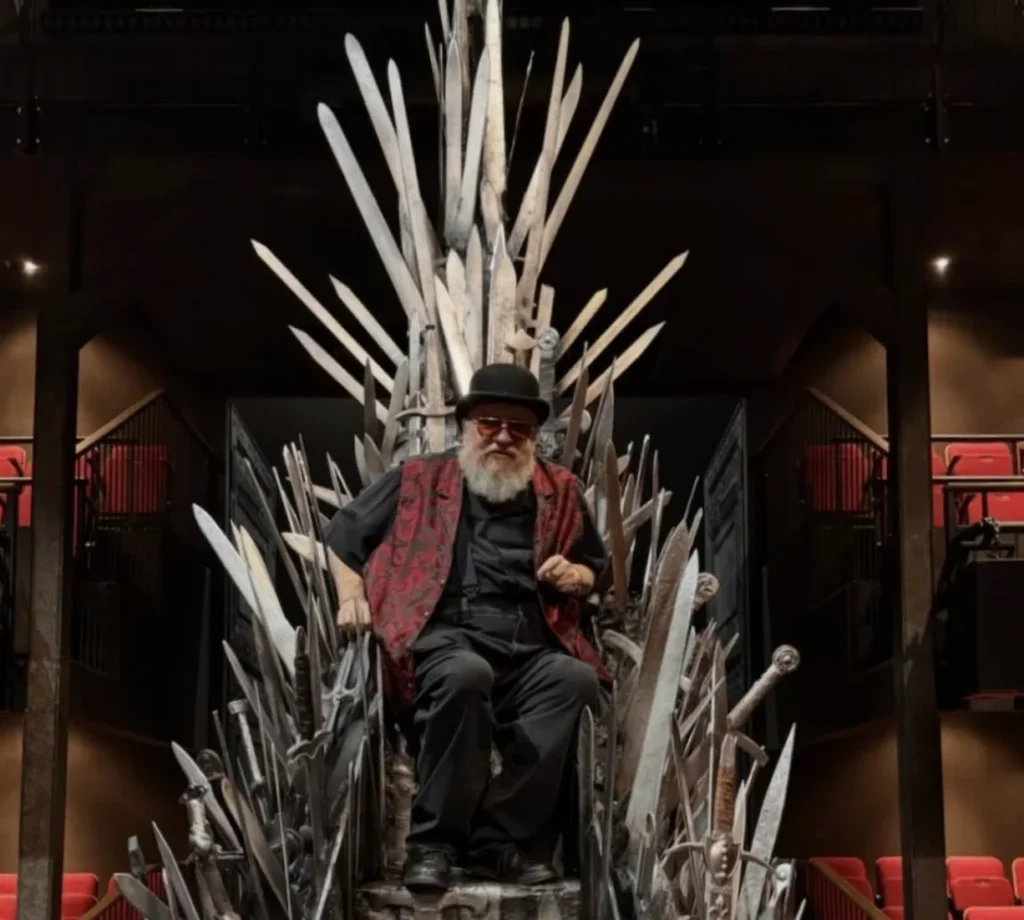
Martin has been considerably less enthusiastic about the direction of the adaptation.
The author revealed earlier this year that his relationship with Condal is now “abysmal,” despite the pair working closely together during the first season.
“I hired Ryan. I thought Ryan and I were partners, and we were all through the first season. I would read early drafts of the scripts. I would give notes. He would change some things. It was working really well — I thought.”
According to Martin, that relationship deteriorated during S2.
“Then we got into season two, and he basically stopped listening to me, I would give notes, and nothing would happen.”
Martin said the situation eventually reached the point where HBO asked him to submit his notes to the network, which would then combine them with its own feedback before sending them to Condal.
The tension represents a dramatic change from the show’s beginning. Miguel Sapochnik originally served alongside Condal as co-showrunner for S1 before departing the series, leaving Condal as its sole showrunner beginning with S2. The post-Sapochnik era has been considerably more divisive among parts of the fanbase, particularly when it comes to pacing, characterization and changes from Martin’s book, though S3 itself has also received praise for some of its large-scale episodes.
Season 3 made some of the adaptation’s biggest changes yet
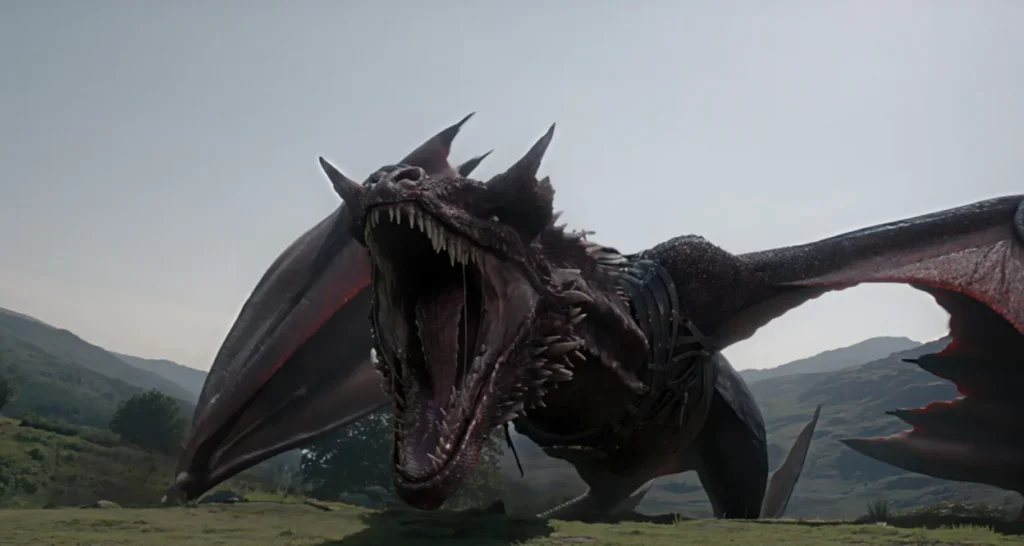
S3 illustrates exactly what Condal means when he describes prioritizing the television version of the characters over strict adherence to Fire & Blood. While the series has changed Martin’s history from the beginning, the third season contains some of its most substantial departures yet.
Perhaps the largest ongoing departure involves Nettles, the young dragonseed who claims the wild dragon Sheepstealer in Martin’s book. The television adaptation removed Nettles and effectively folded elements of her storyline into Rhaena Targaryen, who claims Sheepstealer herself. In Fire & Blood, Rhaena never rides Sheepstealer and eventually bonds with a completely different dragon, Morning. The change substantially alters Rhaena’s story while also affecting Daemon’s, as his relationship with Nettles becomes an important part of his later story in the book.
Condal specifically defended another major change involving Daemon, who was placed directly into the conflict at Tumbleton despite that not being his role in Fire & Blood.
“Daemon had to be put at the center. In a television show where you’re completing a story arc [each season], that was absolutely necessary.”
Condal acknowledged that he likely would have resisted making such a substantial departure during an earlier season because of how different it was from Martin’s book. By S3, however, his philosophy had changed.
“Undoubtedly, it’s just better for Daemon’s arc, and it’s better for television storytelling.
Those were far from the season’s only deviations. Helaena’s death and its timing were significantly changed, Corlys Velaryon’s fate was rewritten, the Battle of the Honeywine and the taking of King’s Landing were reworked, and Rhaenyra’s execution of the High Septon was invented entirely for the television series. Season 3 also continued transforming Helaena into a much more explicitly prophetic figure than the character depicted in Fire & Blood.
But one of the season’s most consequential additions involved Aegon the Conqueror’s “Song of Ice and Fire” prophecy, which the series has increasingly made central to Rhaenyra’s motivations.
The prophecy was originally introduced in Season 1 as a secret passed from Targaryen ruler to heir: Aegon conquered Westeros in part because he foresaw a terrible threat eventually arriving from the North and believed a united realm would be necessary to defeat it. The underlying idea that Aegon was a dreamer whose vision helped motivate his conquest came from George R.R. Martin, but the television series has substantially expanded the prophecy’s role in Rhaenyra’s story.
S3 pushes that idea much further. Rhaenyra increasingly comes to believe that the prophecy is not simply a responsibility entrusted to her, but evidence that she herself has a divinely important role to play in saving Westeros.
Condal says that interpretation is intentional — and that Rhaenyra is wrong.
“Rhaenyra’s not the chosen one. If there is a chosen one in the prophecy, he said, “it’s Daenerys or Jon Snow,” depending on how the Prince That Was Promised is ultimately interpreted.
Instead, Condal and the writers were interested in what happens when Rhaenyra becomes convinced that she is that person.
“We were really interested in [what happens] when you imbue Rhaenyra with that idea and make her feel that way. You can see what happens to a person in their desperation to win at any cost.”
That storyline culminates in the S3 finale, when Rhaenyra publicly reveals the Song of Ice and Fire prophecy and effectively declares herself the prophesied ruler destined to protect the realm. It is a dramatic departure from Fire & Blood, where no such public declaration is recorded and the prophecy itself does not appear as part of Rhaenyra’s historical story.
The change naturally creates another question: if Rhaenyra publicly revealed one of the Targaryen dynasty’s greatest secrets, why does nobody appear to remember it?
Condal has addressed that discrepancy directly. His explanation is essentially that the people who heard Rhaenyra had little reason to believe what she was telling them.
From their perspective, Rhaenyra is an increasingly unpopular monarch making an extraordinary claim about herself and a supernatural threat supposedly arriving generations in the future. Condal joked that “Targaryens say crazy shit all the time,” arguing that her declaration could easily have been dismissed as another example of an increasingly despotic Targaryen ruler attempting to justify her own power.
That also fits with Condal’s broader interpretation of Fire & Blood. The book is not presented as an omniscient account of exactly what happened during the Dance of the Dragons. It is an in-universe history assembled long afterward from incomplete, biased and frequently contradictory sources.
“We know certain things happened—big things like coronations, deaths, things like that—but the hows and the whys seem more up to interpretation. Individual moments could be up for debate.”
Under that interpretation, Rhaenyra could have revealed the prophecy without it surviving as accepted history. Those recording the Dance may never have understood its significance, may not have considered the story credible, or could simply have regarded it as the grandiose declaration of a ruler whose reputation was rapidly deteriorating.
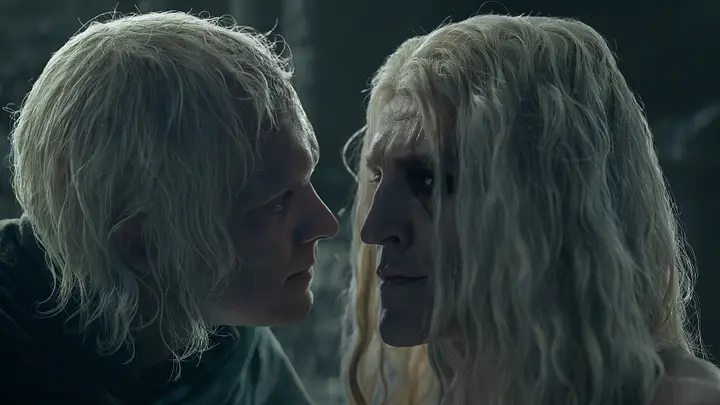
The finale then makes another particularly consequential addition by having Aegon and Aemond reunite, despite the brothers never interacting again in the surviving historical record after their earlier separation.
Condal has defended that decision using essentially the same logic. Aegon disappears from portions of the historical record, and the fact that historians do not record another meeting between the brothers does not necessarily prove one never occurred.
The Battle of Tumbleton itself was also dramatically expanded and reconfigured for television, becoming the centerpiece of the finale. Condal described the sequence as an even larger practical undertaking than the Battle of the Gullet, involving hundreds of extras alongside armor, stunt performers, fire and an enormous physical set. Hugh the Hammer had a big change in here as well, with him not being directly involved with the destruction of Tumbleton. In the books, he teamed up with Ulf to go rogue, although some sort of interpration of rebeling could still happen in S4 with his wife now passing away.
“It was actually a bigger episode than the Gullet, just in terms of eating up more of our practical shooting schedule.”
Condal said, describing Tumbleton as ‘a gigantic thing’ that became a major test of the production crew after the two enormous sequences were shot nearly back-to-back.
Taken together, the changes demonstrate the adaptation philosophy Condal says he finally embraced between S2 and S3. Rather than worrying about whether every individual moment matches Fire & Blood, he now views the book as the historical framework for his version of the story.
“I still regard this adaptation as tremendously faithful to the overall text and the broad story that it is telling. Even when there are individual moments that are surprising or different.”
Condal says S4 will continue experimenting
MAJOR SPOILERS: What could still happen in House of the Dragon
The following section contains major spoilers from George R.R. Martin’s Fire & Blood, including the expected deaths of several major characters and the ending of the Dance of the Dragons. The television series has already made substantial changes, so there is no guarantee every event below will happen in the same way.
If House of the Dragon continues following the broad outline of Fire & Blood, Season 4 still has an extraordinary amount of story to cover.
Daemon vs. Aemond above the Gods Eye
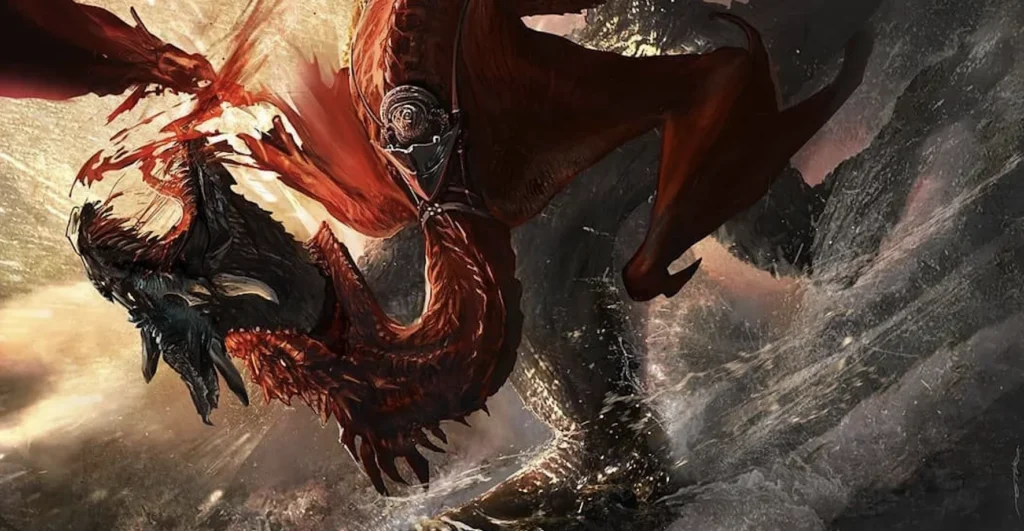
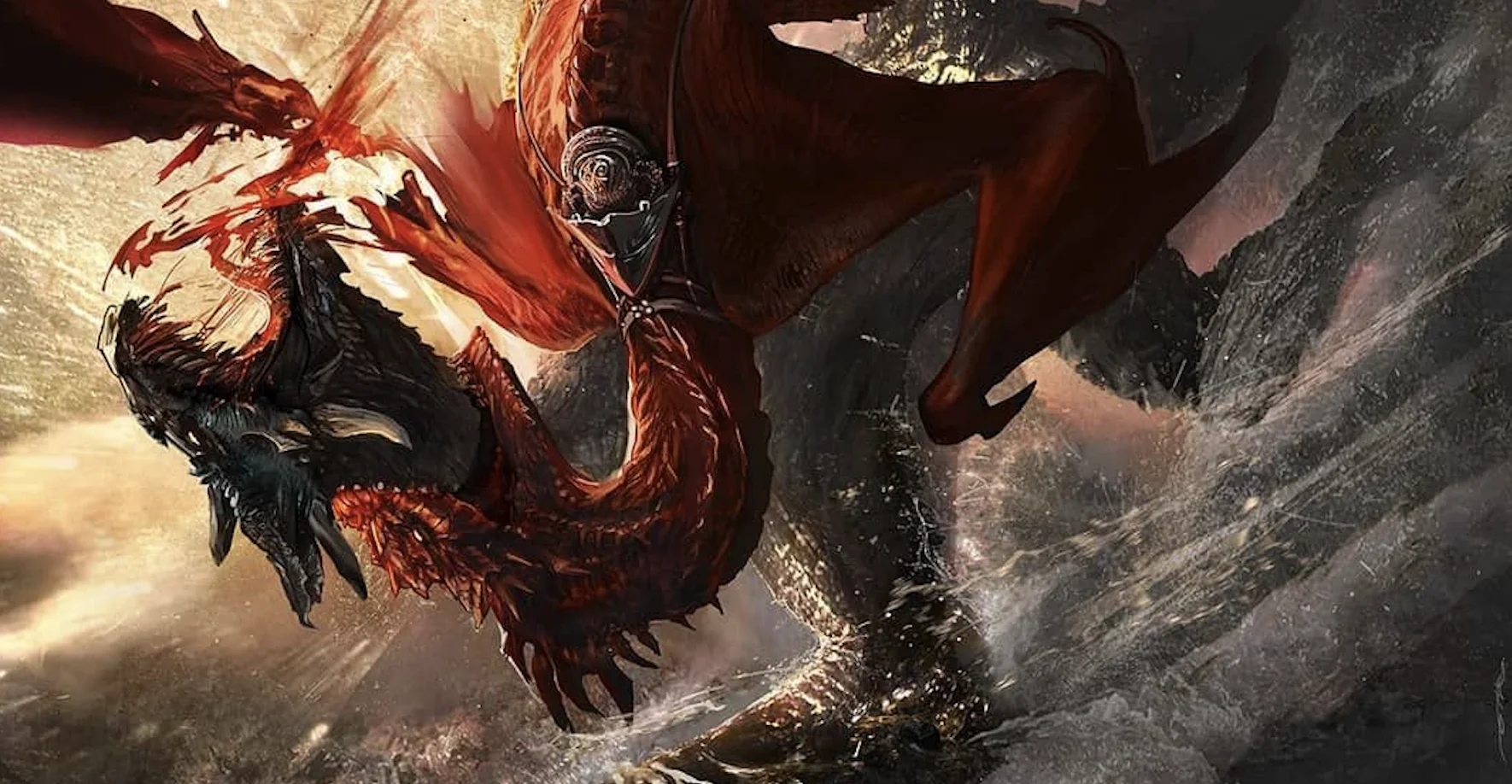
One of the biggest remaining events is the Battle Above the Gods Eye, the climactic confrontation between Daemon and Aemond.
In Martin’s history, the two Targaryens finally meet above Harrenhal on Caraxes and Vhagar. Daemon leaps from Caraxes onto Vhagar in midair and drives Dark Sister through Aemond’s remaining eye before both dragons plunge toward the lake below.
Both Aemond and Vhagar die, while Caraxes survives the initial fall long enough to crawl from the water before dying. Daemon’s body is never recovered.
Given how dramatically Season 3 has changed both men’s paths, however, the circumstances leading to the battle could be very different.
The Second Battle of Tumbleton
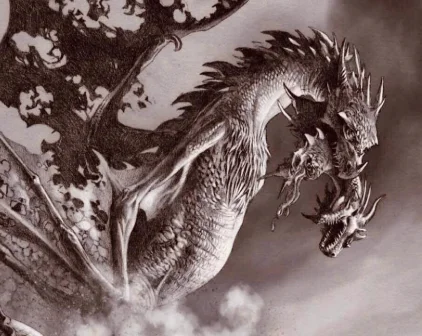
The first Tumbleton has already been heavily reworked, but the book contains another enormous confrontation at Tumbleton.
Addam Velaryon gathers an army and launches a surprise attack while the dragonseeds Hugh Hammer and Ulf White have become increasingly dangerous. The resulting chaos eliminates several major players and dragons from the war in rapid succession.
How HBO gets there could again differ considerably given the changes already made to Daeron, Ulf and the first Tumbleton.
I wouldn’t even be surprised if this gets scrapped completely given the elements already used.
The Storming of the Dragonpit
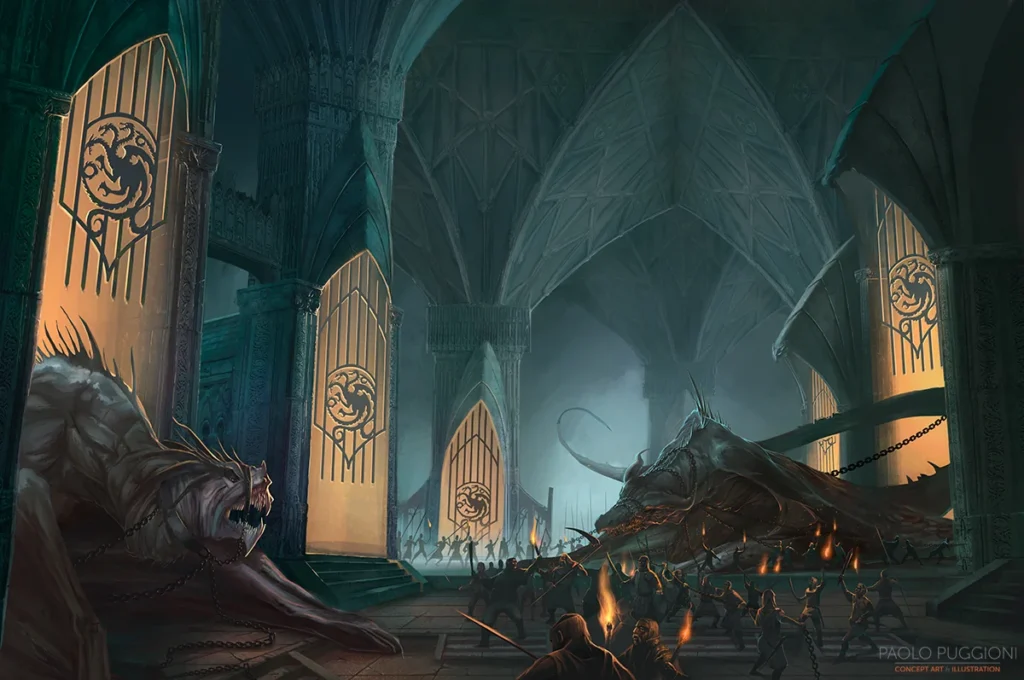
One of the darkest events remaining is the Storming of the Dragonpit.
As Rhaenyra’s control over King’s Landing collapses, the population rises against her. A religious figure known as the Shepherd helps inspire a massive mob to attack the Dragonpit, where several of the remaining Targaryen dragons are killed at enormous human cost.
It represents one of the defining moments in the decline of the Targaryens’ dragons and helps make Rhaenyra’s position in King’s Landing untenable.
The television series has already laid considerable groundwork for growing resentment toward Rhaenyra, and S3’s decision to have her execute the High Septon could give the show its own route toward the uprising.
Rhaenyra loses King’s Landing
With King’s Landing descending into chaos, Rhaenyra ultimately abandons the Iron Throne and flees the capital.
That brings her back toward Dragonstone, and directly into one of the most famous deaths in Targaryen history.
Aegon II kills Rhaenyra
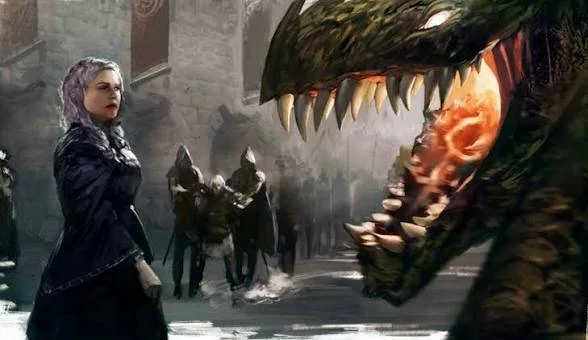
Aegon II secretly takes control of Dragonstone before his half-sister arrives.
When Rhaenyra returns, she discovers that Aegon and Sunfyre are waiting for her. Aegon has Sunfyre burn Rhaenyra before the dragon devours her as her young son watches.
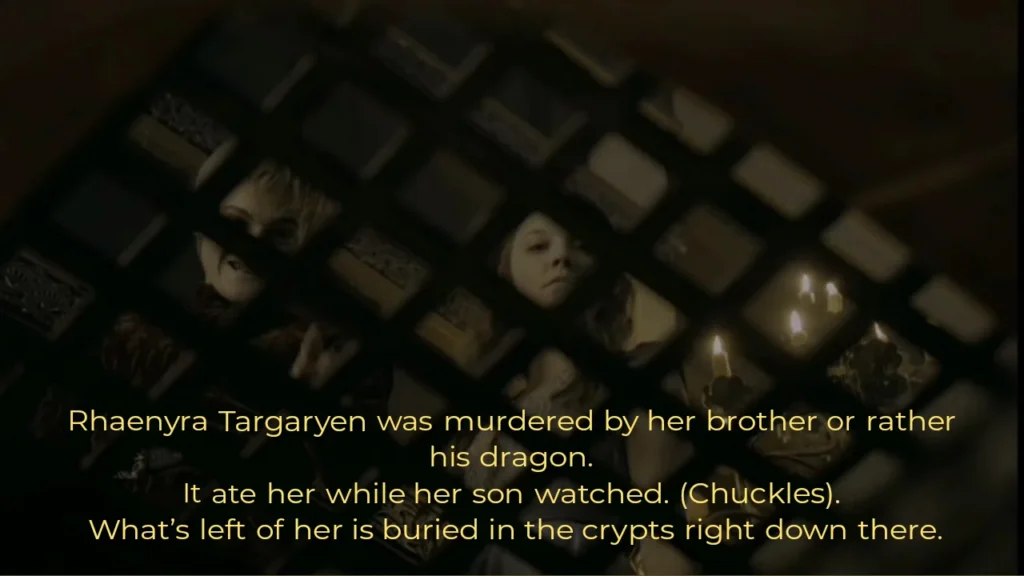
It’s such an established piece of Westerosi history that Game of Thrones actually spoiled Rhaenyra’s fate years before House of the Dragon existed, when Joffrey Baratheon described her death to Margaery Tyrell.
But Aegon doesn’t truly win either.
Rhaenyra’s death still isn’t the end of the Dance.
Aegon II returns to King’s Landing, but his restored reign proves extremely short. With his enemies closing in and his political position collapsing, Aegon is ultimately poisoned.
The precise responsibility for the poisoning is deliberately murky in Martin’s historical telling, although numerous figures are implicated in the conspiracy that brings his reign to an end.
Rhaenyra’s surviving son Aegon III eventually succeeds him, meaning that although Aegon II outlives and defeats Rhaenyra personally, it is ultimately Rhaenyra’s bloodline that continues on the Iron Throne.
Can House of the Dragon fit all of that into eight episodes?
That may ultimately be the biggest question facing Condal.
S3 ends with several of the Dance’s most consequential events still ahead, yet House of the Dragon has only eight episodes remaining. Condal has repeatedly demonstrated that he is willing to condense, combine, reorder or completely reinterpret pieces of Fire & Blood when he believes television storytelling requires it.
And after Martin publicly described their relationship as ‘abysmal,’ there is now unusually little ambiguity about whose interpretation viewers are watching.
For more Game of Thrones updates, check out our site section for it here.